.webp)
They say, “Don’t judge a book by its cover.” But I must admit, I sometimes do. As a bird enthusiast, the cover of ‘The Correspondent’, featuring a pair of beautiful robins, captured my heart at a first go. It was enough to earn the novel a place on my ever-growing to-be-read list, and as I learned more about it, my curiosity continued to deepen. I searched almost all bookstores i knew, but without success and eventually placed an order for a hard copy. Unable to wait, however, I found an online edition and read it. I liked the novel so much that I eagerly reread it as soon as I grabbed the physical copy. Ironically, the edition I received did not feature the robin cover that had first drawn my attention; instead, it had the image of a postbox. As the entire novel unfolds through letters, the cover made sense, though I still have a special preference for those robins that first introduced me to this remarkable book.
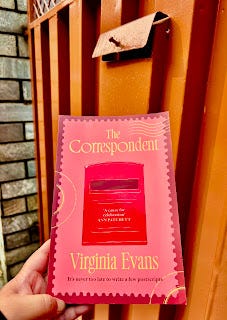
At first, reading Sybil Van Antwerp’s letters felt like peeking into someone else’s private life. However, as her correspondence with the writers started, it became more interesting. I found the correspondence with Ann Patchett more engaging, and as the layered exchanges unfolded, I no longer felt like an outsider. Instead, I felt as if I had become part of the correspondence. The letters drew me quietly, until I was no longer simply observing Sybil’s life but felt like becoming part of its emotional exchange. The letters move through family, friendship, career, guilt, grief, acceptance, and love spanning generations, from teenagers to people in their seventies, and capture the rawness of losing a child, the ache of broken or abandoned relationships, and the quiet beauty of finding companionship later in life. What makes the novel convincing is that Sybil is not presented as a perfect person. She is strong, flawed, firm, resilient, opinionated, vulnerable, and wonderfully human. Her contradictions make her believable. As an adopted child, she longs to understand more about her roots, yet she also carries the wounds of the family she has built. Her interactions with the customer care staff Basam from the DNA services stretches beyond and she also offers him support to find an appropriate job. Her difficult relationship with her daughter Fiona is particularly painful: both of them love each other, but their misunderstandings, hurt, and frustration remain unresolved for a long time.
Sybil’s connection with her half-sister, and the bond they gradually form, is quite moving. Her relationships with her longtime best friend and sister-in-law, Rosalie, is inspiring yet complicated, particularly in relation to Fiona. When Sybil learns that Rosalie and her daughter kept the truth from her, she feels betrayed by both. She does not become pretend that pain disappears easily; she simply continues with dignity.
The novel is also full of raw and humorous interactions. Sybil’s exchanges with Theodore and Mick Watts, and the proposals she receives, bring wit and warmth to the story. Her correspondence with Melissa, the dean of the English college, is funny, as Syvil is not giving up on auditing the course despite refusal from Melissa multiple times. But beneath the humor the novel quietly shows seemingly powerful people still feel vulnerable at the core. Her letters to the newspaper editor are sharp, confident, and perfectly handled and show how unapologetic is Sybil. Even her correspondence with the Garden Club member adds comedy while revealing her toughness.
Her correspondence with Harry, her colleague’s son, is quite touching. She guides him, gives him space to express himself, and gently helps bridge the distance between him and his family. She also encourages him to read and write. Although Harry later seems less interested in continuing their letters. Harry moving to stay with Sybil when he is unwell shows how far she extends comfort and care, even to people outside her own family.
As the story unfolds, we come to understand what made Sybil afraid of travelling abroad, what made her vulnerable, why she became so distant from her family, and why her marriage changed. At first, it may seem as though she does not care about her ailing former husband, who even does not bother to attend the funeral, but her side of the story is unfurls gradually. How she could never come from the grief of Gilbert and how the guilt engraved in her heart explains the weakness she carries inside, despite her attempts to appear tough outside.
What struck me most was the way Virginia Evans transforms ordinary, everyday emotions into something deeply meaningful and enduring. The intricate cross-references between letters, the thoughtful mentions of other books, and Sybil’s correspondence with authors add remarkable depth to the novel, making it feel both intellectually rich and emotionally intimate. One of the saddest moments is Sybil’s bitterness when he daughter Fiona suggests moving her into an elder-care facility. It reveals that her house is far more than a place to live, it is a repository of her memories, independence, and identity. Equally heartbreaking are Sybil’s reflections on her failing eyesight and the accident she suffers during the blackout. For Sybil, losing her vision is not simply a physical decline; it threatens the very activities that give her life meaning. Reading and writing letters are not merely hobbies, they are how she remembers, loves, grieves, resists, connects with others, and ultimately survives.
In the hustle and bustle of life, we hardly pause long enough to reflect on what went well, what went wrong, what we regret, and what we still hope. Sybil’s correspondence creates that space for reflection and captures the quiet complexities of being human, the constant act of balance between personal responsibilities, professional identity, family tensions, aging, loneliness, and the universal desire to be seen and understood. This book is raw, intimate, layered, funny, heartbreaking, and comforting all at once. It made me think about the letters we write, the words we never find the courage to say, and the people who quietly shape our lives over time. I must admit, I can no longer remember how many friends and colleagues I have recommended this book to. Many of them later sent me photos of the copies they had bought or borrowed from libraries. Then, a friend opened a bookstore in the city where I live, and I was delighted to see ‘The Correspondent’ finding readers there as well, they shared its. Watching a book that has meant so much to me finding a place not only on my own bookshelf and heart, but also on the bookshelves and hearts of my friends, has been one of the most rewarding part of my reading journey.
When I explored further about the writer Virginia Evans, I found her journey as a writer is inspiring. Before ‘The Correspondent’ got published, Evans struggled on getting publisher, as a result seven of her novels remain unpublished. Her persistence, perseverance is something to learn, even ‘The Correspondent’, got attention from word of mouths. Her journey shows that recognition often arrives only after a long and unseen struggle. Success often looks like the tip of an iceberg; beneath it is patience, discipline, rejection, doubt, and perseverance. Failure is painful for everyone, but for writers, perhaps it can also become material for the next project. Evans’ story made me respect the novel even more.
‘The Correspondent’ is a beautifully intimate novel about memory, grief, family, friendship, aging, love, and the quiet courage of continuing. It reminded me that letters are not just words on a page; they are evidence of attention, care, conflict, apology, longing, and connection. I have not written many letters myself, but have relied more on mails, chats, and texts, but this book made me realize how powerful correspondence can be and how personal it feels. Those who still take the time to write letters and wait for the response of letters deserve to be valued for their patience and perseverance.
‘The Correspondent’ published in 2025 recently won the Women’s Prize for Fiction 2026, this feels so well deserved. As its themes are not bound to a particular moment; I believe, this book shall continue to be relevant for decades and help readers understand loneliness, regret, forgiveness, aging, family conflict, and the need for connection. If a reader reads this book, this book might perhaps make one want to write a letter of their own. Before reading ‘The Correspondent’, I had never thought that an epistolary novel could be so powerful, this is more of untouched genre for me. It left such a lasting impression that I picked up another classic, ‘84, Charing Cross Road’ by Helene Hanff.
For me, ‘The Correspondent’ is a rare five-star read: unforgettable, deeply moving, and a book which I will keep revisiting. I would recommend ‘The Correspondent’ to readers of all ages, from teenagers to senior citizens, especially to those who enjoy reflective fiction, richly layered characters, and stories that uncover extraordinary depth in ordinary human experiences.
